
Intervention by Felipe Buitrago
Geneve, Switzerland, September 18, 2024
(This text has been edited and adapted from the original intervention for clarity and presentation purposes. While significant adjustments have been made to enhance readability and flow, the core message and structure remain faithful to the original content.)
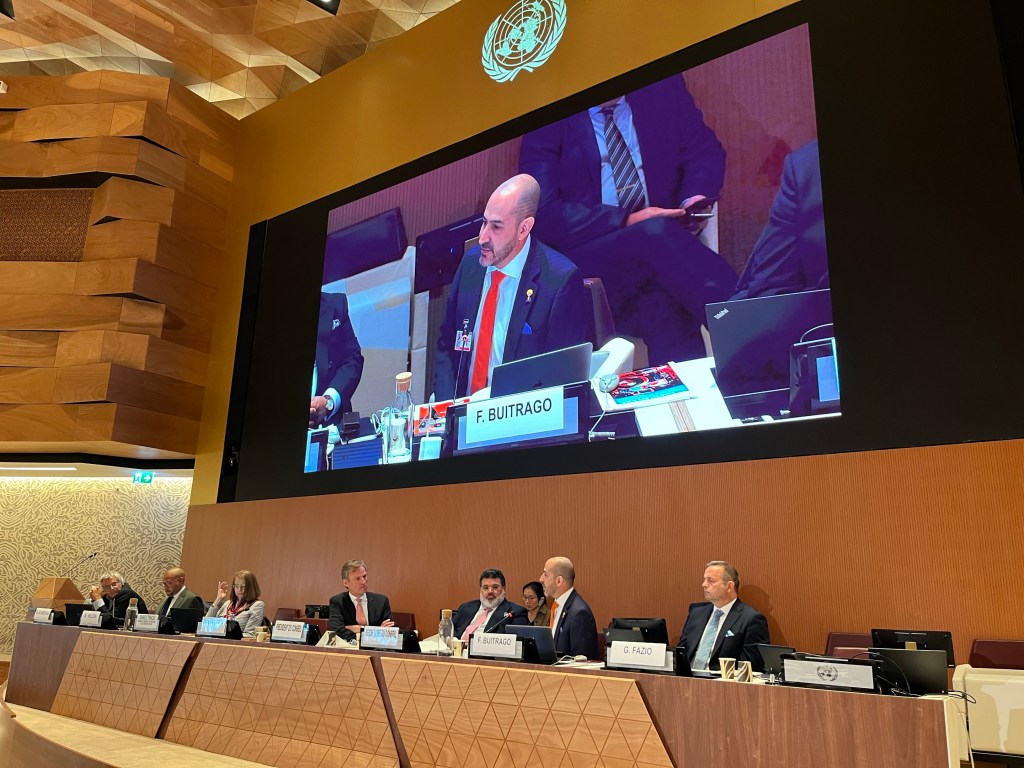
Thank you, Mr. President. It’s truly a pleasure to be here today, and I want to express my gratitude to Madame Secretary General and the Director for giving me the opportunity to address this esteemed panel. Speaking in such a forum is always both an honor and a challenge, because there are so many critical issues to discuss.
Framing the Global Challenge
Today, we find ourselves at a crossroads—one where despair and opportunity are locked in a delicate balance. The choices we make now will determine which of these prevails. The path ahead is not simple, and it can be hard to know where to begin. So, let me start by sharing an old Cherokee tale that I believe encapsulates the essence of the moment we face.
The story goes that a grandfather, speaking to his grandchildren, describes a terrible battle within himself—a struggle to death between two wolves. One wolf represents evil—despair, darkness, hatred, and fear. The other wolf embodies light—hope, peace, and love. The children, fearful of the struggle, ask, “Grandfather, which wolf will win?” And with quiet wisdom and a caring stare, the old man responds, “The wolf you feed.”
In many ways, this story is our story today. We, too, are in the midst of a battle—on a global scale—between despair and hope. On one side, there is the wolf of darkness. And, sadly, there is much in our world today that could feed that wolf.
Look at the demographic trends. In many parts of the world, population growth is slowing, even collapsing, and the ripple effects of this decline threaten everything from economic growth to geopolitical stability. We’re seeing changes in consumption patterns, shifts in labor markets, and entire economies bracing for a future where the population pyramid no longer supports its foundation. This is the stuff of pessimism—fuel for the wolf of despair.
Then there’s the digital transformation, now entering its next, more complex stage. The first wave of digitalization—through social networks, robotics, and virtual reality—disrupted nearly every aspect of our lives, from how we communicate to how we perceive culture. We’re now hearing whispers of artificial intelligence as the new existential threat, but we’ve already felt the impact of earlier technologies. The way these innovations have fractured our societies—dividing us rather than uniting us—is a sobering reality. Instead of fostering understanding, they’ve often intensified division, feeding the wolf of darkness yet again.
And perhaps one of the most dangerous trends we face is the erosion of belief in the power of globalization and trade. I recently heard someone say, “We’ve lost the ability to explain the goodness of trade.” Think about that for a moment. Now, the conversation is dominated by terms like deglobalization, reshoring, and geo-economic fragmentation. Some of these concepts are grounded in fact, but many are driven by fear—and fear, as we know, is a feast for the wolf of hatred.
We are in a moment where it is all too easy to feed the wrong wolf.
But we don’t have to. There is another side to this story—another path we can take. I stand before you today from the perspective of the creative economy, or as I rather to call it: the Orange Economy, where I see a way to feed the wolf of light. To create a future that is rich in hope, in collaboration, and in human connection. A future grounded in creative talent. Because while it is true that we face serious challenges, it is equally true that we possess immense potential to overcome them.
The Orange Economy as the Path Forward
While the challenges I’ve outlined may seem daunting, I stand before you today with a simple but profound belief: we can choose to feed the wolf of light. The antidote to despair is creativity, collaboration, and the recognition that, in the face of global uncertainty, the creative economy offers us a path forward. Through the lens of creativity, economics becomes more than a system of transactions; it becomes a system of meaning discovery, of cultural exchange, of human connection.
We need a diet rich in hope, love, and creative exchange. And for me, creativity and economics are not separate entities; they are two sides of the same coin. Our most meaningful exchanges, our true wealth, come not just from the trade of goods, but from the exchange of ideas, the sharing of meaning, and weaving a common social fabric.
You see, if you focus solely on GDP, on trade balances, you see only the numerical side of the coin. But, as was famously said, «Not everything that can be counted counts, and not everything that counts can be counted.» Culture, creativity, human interaction—these are the unquantifiable forces that bind us. And if we’re to feed the wolf of light, we need to embrace both sides of that coin. Trade, after all, follows culture, just as the Prince of Wales noted in the 1920s when he said, «Trade follows the film.»
Over a decade ago, I had the privilege of co-authoring The Orange Economy: An Infinite Opportunity with former president of Colombia Ivan Duque. Back then we were both working at the Inter-American Development Bank, and so we develop a communicational tool tailored for the Latin American and Caribbean context, and yet valid throughout the world as its outreach demonstrates.
In that book, we laid out a vision for how creativity could transform economies—how ideas could be the foundation of a new kind of wealth, one rooted not just in material goods but in culture, meaning, and mutual understanding and recognition. We envisioned a future where hope and opportunity would be abundant, driven by the energy and ingenuity of the creative industries. This vision is even more relevant today as it was then, and it is captured in what we call the seven I‘s—the seven ideas, the key principles for a strategic and integral development of the Orange Economy and help us navigate these turbulent times. A recipe for a hearty orange juice to feed the wolf of light with the hope vitamins and love nutrients it needs to grow stronger and win its struggle against darkness.
Let me walk you through these recipe.
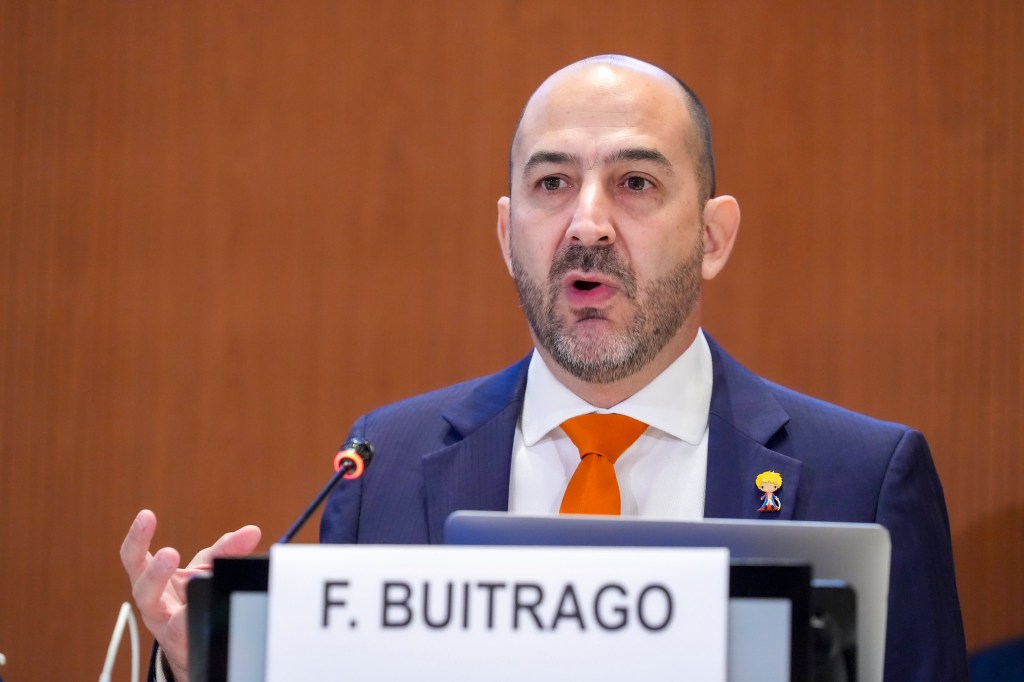
The first I is for Information. You cannot manage what you do not measure. We need data, research, and constant reporting if we are to understand the full scope of the Orange Economy. Creativity might be intangible, but its impact is real, and we must be rigorous in tracking the dynamics behind it. For example, understanding the complex value chain behind a simple book, a theater play, or a digital media product is essential to unlocking their full potential. What policies are working? What adjustments are needed? Without data, we are flying blind. With it, we have the insights necessary to make better informed decisions.
The second I is for Institutions. Creativity doesn’t exist in isolation. Whether we’re talking about multilateral organizations, national governments, regional bodies, or even private enterprises, institutions provide the scaffolding that supports creative industries. These ecosystems must be robust enough to foster innovation, but also flexible enough to allow for debate, disagreement, and collaboration.
A critical element of this ecosystem is intellectual property (IP), which ensures that creators are recognized and rewarded for their work. IP protection provides the legal framework that encourages creators to invest time and resources into their ideas, knowing their innovations and artistic expressions are safeguarded. Without it, the creative economy would lack the foundation of trust and incentive necessary for sustained growth.
Just as nothing can happen in a vacuum, no creative endeavor can thrive without the support of institutions that enable coordination and growth. It is through these institutions—both public and private—that we can foster the conditions for creativity to flourish on a global scale.
The third I is for Infrastructure. Here we are talking about the physical and digital spaces where creative work happens. Creativity doesn’t just take place in the mind—it needs a platform to exist in the world and to connect the people in it. Infrastructure means having the places and tools for creativity to blossom. It could be a shared cultural space in a community, a state-of-the-art theater, or a high-speed internet connection that allows an artist in a remote village to reach a global audience. Resources are limited, but if we invest in the right infrastructure—guided by information and supported by institutions—we can build environments where creative minds can thrive. Better places for people to live, work and play.
Now, the fourth I is for Industry. And when I talk about industry, I don’t mean it in the traditional sense of factories and assembly lines. Rather, I refer to it in its broadest sense: industriousness. The creative economy begins with an idea in the mind of an individual—a writer, a filmmaker, a designer—but that’s only the starting point. For that idea to realize its potential, it must be transformed into something tangible, something that can be shared, experienced, and valued by others.
Industry, in this context, is the engine that turns creativity into both economic and social value. It’s about building cultural capital—not just in the form of products or services, but in the accumulation of ideas, traditions, social conventions, and shared values that strengthen the fabric of societies. This process involves much more than individual creativity; it’s the result of a collaborative effort between entrepreneurs, investors, and artists. Together, they bring concepts to life, ensuring that creative outputs are not only conceived but developed, financed, produced, distributed, and consumed from a local to a global scale.
The creative economy, therefore, is a vast and dynamic ecosystem, encompassing everything from intellectual property to entertainment, fashion to publishing, and much more. Each of these sectors plays a crucial role in generating cultural and economic wealth, fostering innovation, and building connections between people. And, importantly, each requires the industrious coordination of creative talents, business acumen, and investment to thrive. This kind of industry is not defined by machines or factories but by the human spirit of creation, collaboration, and perseverance that turns intangible ideas into lasting value.
The fifth I is for Integration. Trade is at the heart of this. But when we talk about trade, we must remember that it’s not just about the exchange of goods between countries. Trade happens at every level—within communities, between municipalities, across regions, and, of course, globally. Integration means connecting different parts of the world, or even different parts of society, in ways that amplify the reach of creative ideas. Sometimes, a small, niche idea—maybe a local folk tradition or an avant-garde art form—can find its audience on the other side of the globe, thanks to the digital economy. Integration allows creative economies to scale, to connect the local to the global, and to build bridges across cultures and markets.
The sixth I is for Integration. Creativity is not just about producing individual works—it’s about weaving those works into the broader fabric of society, connecting different cultures, ideas, and industries across borders. Integration ensures that creative efforts don’t exist in isolation but are brought together to form a cohesive whole. Whether through music, film, fashion, or technology, creativity has the power to unite diverse groups and transcend geographical, cultural, and social boundaries.
When we integrate creative industries and ideas—whether locally or globally—we’re not just sharing products or services; we’re sharing identities, values, and perspectives. This process of integration enables us to build bridges between different sectors, communities, and nations. It amplifies the reach of creative content and fosters cross-cultural understanding. In a world that often feels fragmented, creative integration can be a powerful force for unity, enabling us to see beyond our differences and recognize our shared humanity.
By fostering integration, we strengthen the ties that hold us together, promoting collaboration across borders and sectors, and creating more resilient and inclusive societies. This is why the integration of the creative economy into the broader global system is not just a cultural necessity but an economic one—allowing for innovation to thrive and diverse voices to contribute to a richer, more interconnected world.
Finally, the seventh I is for Inspiration. At the heart of every creative industry, at the heart of every innovation, is the spark of inspiration. Creativity is born from a sense of wonder, a belief that things can be different, better. And this sense of possibility is not something we can take for granted. As Sir Ken Robinson said, “A creative adult is a child who has survived.” We must nurture the next generation’s ability to imagine, to play, to think outside the box. Inspiration doesn’t just come from the arts—it comes from education, from environments where curiosity is encouraged, and where failure is seen as part of the learning process. The most innovative societies are those that inspire their citizens to dream.
And this is why education must evolve. We need to move from a STEM-based approach—focused solely on science, technology, engineering, and mathematics—to a STEAM approach, where the arts and design take their rightful place alongside technical skills. The problems we face in the coming century will not be solved by technical knowledge alone. While expertise in science, technology, engineering, and mathematics is vital, it’s only part of the solution. To truly tackle the complex challenges of the future, we need what are often called «soft skills»—but I prefer to call them essential skills. Creativity, empathy, critical thinking, teamwork, adaptability, and innovation are not optional; they are fundamental to solving problems that span cultures, industries, and disciplines.
These essential skills—creativity, empathy, and innovation—are cultivated through learning and practicing arts and culture. It’s not about turning everyone into an artist, but about making us all better human beings. In an age where machines are increasingly efficient at being machines, our focus must be on ensuring that people become ever better at being humane. The arts teach us to imagine, to connect with others on a deeper level, and to think in ways that transcend algorithms and automation. By fostering these essential skills, we equip ourselves for a future where what truly matters is our ability to be compassionate, adaptable, and profoundly human in an increasingly mechanized world.
Call to Action: Shaping the Future through Creativity
So, where does this leave us? We’ve examined the challenges that seem to dominate our headlines—demographic shifts, technological disruption, the fear of deglobalization. We’ve also explored how the creative economy, guided by the principles of the seven I’s, offers a way to feed the wolf of light, bringing hope, innovation, and human connection to the forefront. But now comes the most important question: What will we do about it? How do we, as leaders, policymakers, and innovators, shape the future through creativity?
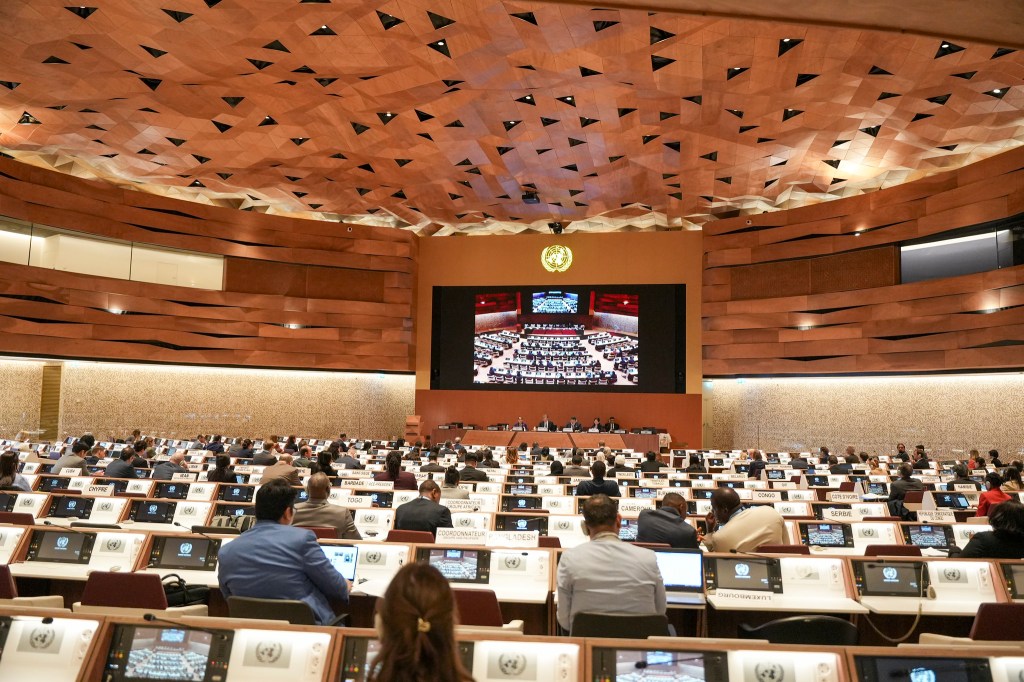
The answer begins with a commitment to transformation—starting with how we educate and inspire the next generation. Education is the foundation of everything. If we want to build a future that embraces creativity, we must move to a STEAM model. Why? Because the challenges of the 21st century require not only technical solutions but also creative, empathetic, and imaginative ones.
Consider this: some of the most brilliant minds in the world—the scientists, and engineers working at CERN, just a few kilometers from here—are, usually, also fans of science fiction. Many of them are what we affectionately call Trekkies. Think about the role that a fictional universe like Star Trek has played in inspiring real-world innovation. The personalized communication devices we all carry in our pockets today? First imagined on the Starship Enterprise, later made real by engineers. Automatic doors, another once-futuristic idea? Now a mundane reality in our daily lives. But the most important contribution of Star Trek isn’t technological—it’s social. The diverse, inclusive crew of the Enterprise, men and women from different races and even different species, was a radical vision of a future where humanity worked together, across boundaries. That, too, was first imagined by creatives.
Culture has always been a powerful force in shaping the world we live in today. Imagination has a way of making the impossible seem inevitable. And in the same way that the creative visions of the past helped shape our present, the creative visions of today will shape our future. But it’s not just about producing new technologies or cultural products. It’s about inspiring entire generations to think differently, to see the world not as it is but as it could be.
And here’s where the creative economy becomes more than just a niche area—it becomes a driving force for social cohesion and global progress. Through creativity, we can bridge the divides that threaten to pull us apart. When we tell stories—through music, film, art, or literature—we build empathy. We communicate our experiences, our values, our dreams. In a time when the world often seems fractured, creativity offers a way to remind us of our shared humanity. It brings us together.
This is the essence of the network effect of creativity. It’s more than just an exchange of products or ideas—it’s an exchange of identities, cultures, and possibilities. When a film is produced in one country and seen in another, when a piece of music travels across borders, when art is shared and experienced globally, we are participating in something greater than commerce. We are participating in the creation of a global social fabric. The stronger these creative exchanges, the stronger our collective resilience. We become a world not defined by our differences but united by our diversity.
But this won’t happen by itself. As Antonio Machado once said, “In matters of culture and knowledge, you only lose what you withhold, and you only get to keep what you give.” It is in the act of giving—of sharing our creativity, our culture, our ideas—that we truly create lasting value. So, we must give freely, generously, and with intention. We must invest in the creative industries, not as an afterthought, but as a core component of our economic and social strategies. Governments, institutions, and businesses must recognize that creativity is not a luxury—it’s a necessity for the future we want to build.
The power of the creative economy is not just in its ability to generate jobs or stimulate economic growth, though it does both. Its true power lies in its ability to inspire, to transform, and to connect. In a world that sometimes feels consumed by the wolf of darkness, creativity is the light that guides us forward.
As we move forward, let us commit to feeding that wolf of light. Let us commit to policies that support the creative economy, to educational systems that foster imagination, to trade agreements that allow culture and creativity to flourish across borders. And most importantly, let us commit to nurturing the next generation—to giving them the tools, the inspiration, and the encouragement to change the world.
Because, as Steve Jobs once said, «The people who are crazy enough to think they can change the world are the ones who do.» We must be those people. We must inspire the next generation to be those people. Through creativity, through collaboration, and through our shared pursuit of a better world, we can ensure that the wolf of light triumphs.
Thank you.
 Go Future HUB